Poems by Alfred Tennyson: I Built My Soul a Pleasure House
In this collection of poetic art, I invite you to enjoy the soul-touching, exquisite, and deeply philosophic poems by Alfred, Lord Tennyson (1809–1892), the prominent English Victorian poet, famous for the amazing technicality, musicality, and sophistication of his literary heritage. In his poetry, he touches on a variety of timeless themes, sharing his thoughts and…
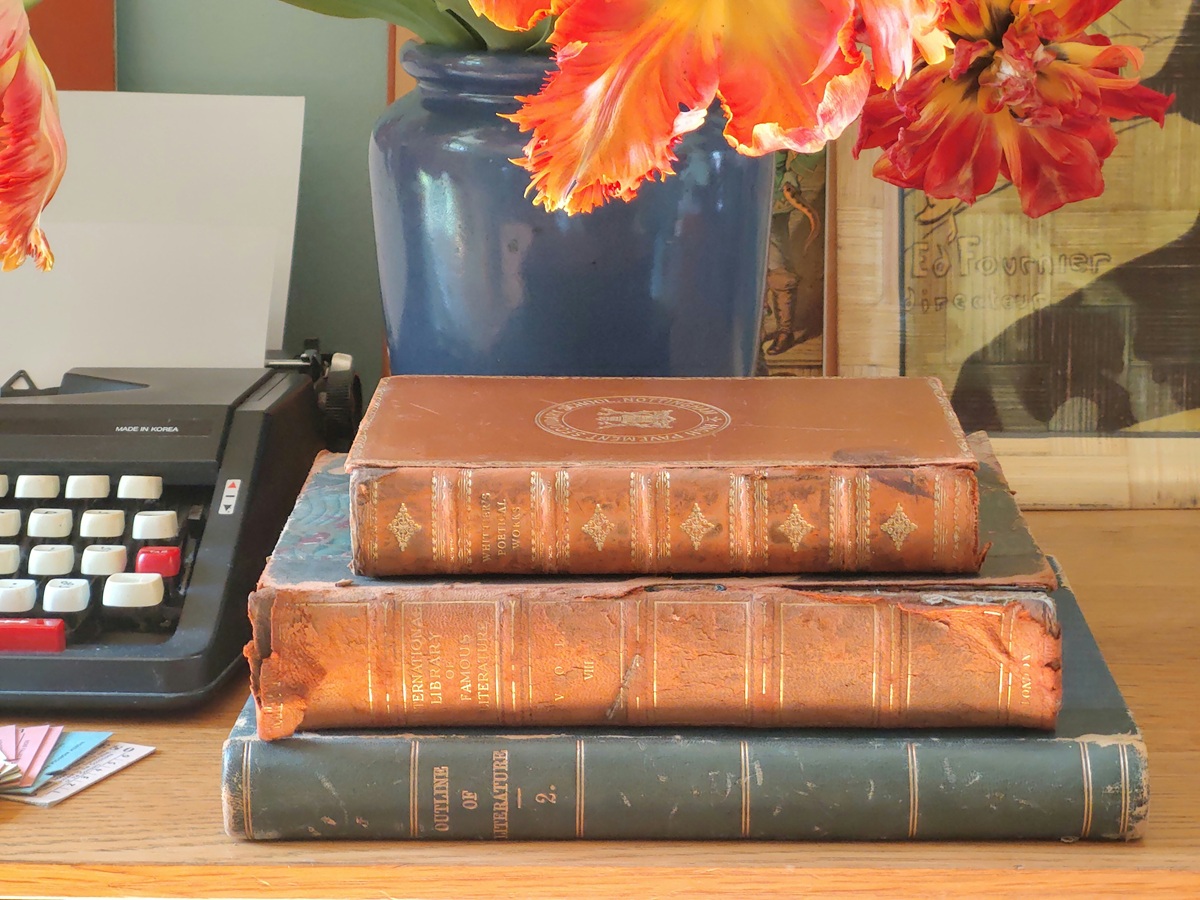
In this collection of poetic art, I invite you to enjoy the soul-touching, exquisite, and deeply philosophic poems by Alfred, Lord Tennyson (1809–1892), the prominent English Victorian poet, famous for the amazing technicality, musicality, and sophistication of his literary heritage. In his poetry, he touches on a variety of timeless themes, sharing his thoughts and explorations of life, faith, grief, love, and duty, and is among the most-quoted writers in the English language.
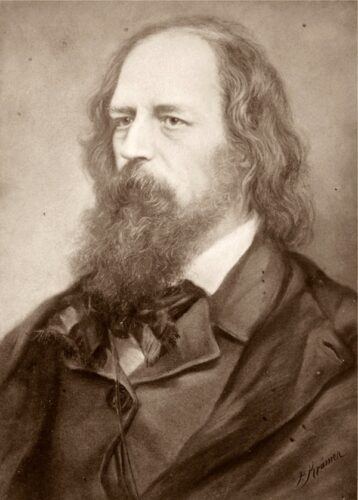
I Built My Soul
From the Palace of Art
I built my soul a lordly pleasure-house,
Wherein at ease for aye to dwell.
I said, “O Soul, make merry and carouse,
Dear soul, for all is well.”
A huge crag-platform, smooth as burnish’d brass,
I chose. The ranged ramparts bright
From level meadow-bases of deep grass
Suddenly scaled the light.
Thereon I built it firm. Of ledge or shelf
The rock rose clear, or winding stair.
My soul would live alone unto herself
In her high palace there.
To which my soul made answer readily:
“Trust me, in bliss I shall abide
In this great mansion, that is built for me,
So royal-rich and wide.”
Full of long-sounding corridors it was,
over-vaulted grateful gloom,
Thro’ which the livelong day my soul did pass,
Well-pleased, from room to room.
(Alfred Tennyson)
Cradle Song
What does little birdie say
In her nest at peep of day?
Let me fly, says little birdie,
Mother, let me fly away.
Birdie, rest a little longer,
Till the little wings are stronger,
So she rests a little longer,
Then she flies away.
What does little baby say,
In her bed at peep of day?
Baby says, like little birdie,
Let me rise and fly away.
Baby, sleep a little longer,
Till the little limbs are stronger,
If she sleeps a little longer,
Baby too shall fly away.
(Alfred Tennyson)
The Eagle
He clasps the crag with crooked hands;
Close to the sun in lonely lands,
Ring’d with the azure world, he stands.
The wrinkled sea beneath him crawls;
He watches from his mountain walls,
And like a thunderbolt he falls.
(Alfred Tennyson)
Strong Son of God, Immortal Love
Strong Son of God, immortal Love,
Whom we, that have not seen thy face,
By faith, and faith alone, embrace,
Believing where we cannot prove;
Thine are these orbs of light and shade;
Thou madest Life in man and brute;
Thou madest Death; and lo, thy foot
Is on the skull which thou hast made.
Thou wilt not leave us in the dust:
Thou madest man, he knows not why,
He thinks he was not made to die;
And thou hast made him: thou art just.
Thou seemest human and divine,
The highest, holiest manhood, thou:
Our wills are ours, we know not how;
Our wills are ours, to make them thine.
Our little systems have their day;
They have their day and cease to be:
They are but broken lights of thee,
And thou, O Lord, art more than they.
We have but faith: we cannot know;
For knowledge is of things we see;
And yet we trust it comes from thee,
A beam in darkness: let it grow.
Let knowledge grow from more to more,
But more of reverence in us dwell;
That mind and soul, according well,
May make one music as before,
But vaster. We are fools and slight;
We mock thee when we do not fear:
But help thy foolish ones to bear;
Help thy vain worlds to bear thy light.
Forgive what seem’d my sin in me;
What seem’d my worth since I began;
For merit lives from man to man,
And not from man, O Lord, to thee.
Forgive my grief for one removed,
Thy creature, whom I found so fair.
I trust he lives in thee, and there
I find him worthier to be loved.
Forgive these wild and wandering cries,
Confusions of a wasted youth;
Forgive them where they fail in truth,
And in thy wisdom make me wise.
(Alfred Tennyson)

Ring Out, Wild Bells
Ring out, wild bells, to the wild sky,
The flying cloud, the frosty light;
The year is dying in the night;
Ring out, wild bells, and let him die.
Ring out the old, ring in the new,
Ring, happy bells, across the snow;
The year is going, let him go;
Ring out the false, ring in the true.
Ring out the grief that saps the mind,
For those that here we see no more,
Ring out the feud of rich and poor,
Ring in redress to all mankind.
Ring out a slowly dying cause,
And ancient forms of party strife;
Ring in the nobler modes of life,
With sweeter manners, purer laws.
Ring out the want, the care, the sin,
The faithless coldness of the times;
Ring out, ring out my mournful rhymes,
But ring the fuller minstrel in.
Ring out false pride in place and blood,
The civic slander and the spite;
Ring in the love of truth and right,
Ring in the common love of good.
Ring out old shapes of foul disease,
Ring out the narrowing lust of gold;
Ring out the thousand wars of old,
Ring in the thousand years of peace.
Ring in the valiant man and free,
The larger heart, the kindlier hand;
Ring out the darkness of the land,
Ring in the Christ that is to be.
(Alfred Tennyson)
The Kraken
Below the thunders of the upper deep;
Far, far beneath in the abysmal sea,
His ancient, dreamless, uninvaded sleep
The Kraken sleepeth: faintest sunlights flee
About his shadowy sides: above him swell
Huge sponges of millennial growth and height;
And far away into the sickly light,
From many a wondrous grot and secret cell
Unnumber’d and enormous polypi
Winnow with giant arms the slumbering green.
There hath he lain for ages and will lie
Battening upon huge seaworms in his sleep,
Until the latter fire shall heat the deep;
Then once by man and angels to be seen,
In roaring he shall rise and on the surface die.
(Alfred Tennyson)
The Sea-Fairies
Slow sail’d the weary mariners and saw,
Betwixt the green brink and the running foam,
Sweet faces, rounded arms, and bosoms prest
To little harps of gold; and while they mused,
Whispering to each other half in fear,
Shrill music reach’d them on the middle sea.
Whither away, whither away, whither away? fly no more.
Whither away, from the high green field, and the happy
blossoming shore?
Day and night to the billow the fountain calls;
Down shower the gambolling waterfalls
From wandering over the lea;
Out of the live-green heart of the dells
They freshen the silvery-crimson shells,
And thick with white bells the clover-hill swells
High over the full-toned sea.
O, hither, come hither and furl your sails,
Come hither to me and to me;
Hither, come hither and frolic and play;
Here it is only the mew that wails;
We will sing to you all the day.
Mariner, mariner, furl your sails,
For here are the blissful downs and dales,
And merrily, merrily carol the gales,
And the spangle dances in bight and bay,
And the rainbow forms and flies on the land
Over the islands free;
And the rainbow lives in the curve of the sand;
Hither, come hither and see;
And the rainbow hangs on the poising wave,
And sweet is the color of cove and cave,
And sweet shall your welcome be.
O, hither, come hither, and be our lords,
For merry brides are we.
We will kiss sweet kisses, and speak sweet words;
O, listen, listen, your eyes shall glisten
With pleasure and love and jubilee.
O, listen, listen, your eyes shall glisten
When the sharp clear twang of the golden chords
Runs up the ridged sea.
Who can light on as happy a shore
All the world o’er, all the world o’er?
Whither away? listen and stay; mariner, mariner,
fly no more.
(Alfred Tennyson)
Break, Break, Break
Break, break, break,
On thy cold gray stones, O Sea!
And I would that my tongue could utter
The thoughts that arise in me.
O, well for the fisherman’s boy,
That he shouts with his sister at play!
O, well for the sailor lad,
That he sings in his boat on the bay!
And the stately ships go on
To their haven under the hill;
But O for the touch of a vanish’d hand,
And the sound of a voice that is still!
Break, break, break,
At the foot of thy crags, O Sea!
But the tender grace of a day that is dead
Will never come back to me.
(Alfred Tennyson)
The Oak
Live thy life,
Young and old,
Like yon oak,
Bright in spring,
Living gold;
Summer-rich
Then; and then
Autumn-changed,
Soberer hued
Gold again.
All his leaves
Fall’n at length,
Look, he stands,
Trunk and bough,
Naked strength.
(Alfred Tennyson)
In Memoriam, VII
Dark house, by which once more I stand
Here in the long unlovely street,
Doors, where my heart was used to beat
So quickly, waiting for a hand,
A hand that can be clasped no more —
Behold me, for I cannot sleep,
And like a guilty thing I creep
At earliest morning to the door.
He is not here; but far away
The noise of life begins again
And ghastly through the drizzling rain
On the bald street breaks the blank day.
(Alfred Tennyson)
The Splendor Falls
from The Princess
The splendor falls on castle walls
And snowy summits old in story:
The long light shakes across the lakes
And the wild cataract leaps in glory.
Blow, bugle, blow, set the wild echoes flying,
Blow, bugle; answer, echoes–dying, dying, dying.
O hark, O hear! how thin and clear,
And thinner, clearer, farther going!
O sweet and far from cliff and scar
The horns of Elfland faintly blowing!
Blow, let us hear the purple glens replying,
Blow, bugle; answer, echoes–dying, dying, dying.
O love they die in yon rich sky,
They faint on hill or field, or river:
Our echoes roll from soul to soul,
And grow forever and forever.
Blow, bugle, blow, set the wild echoes flying,
And answer, echoes, answer–dying, dying, dying.
(Alfred Tennyson)
Tears, Idle Tears
from The Princess
Tears, idle tears, I know not what they mean,
Tears from the depth of some divine despair
Rise in the heart, and gather to the eyes,
In looking on the happy Autumn-fields,
And thinking of the days that are no more.
Fresh as the first beam glittering on a sail,
That brings our friends up from the underworld,
Sad as the last which reddens over one
That sinks with all we love below the verge;
So sad, so fresh, the days that are no more.
Ah, sad and strange as in dark summer dawns
The earliest pipe of half-awakened birds
To dying ears, when unto dying eyes
The casement slowly grows a glimmering square;
So sad, so strange, the days that are no more.
Dear as remembered kisses after death,
And sweet as those by hopeless fancy feigned
On lips that are for others; deep as love,
Deep as first love, and wild with all regret;
O Death in Life, the days that are no more!
(Alfred Tennyson)
Sweet and Low
from The Princess
Sweet and low, sweet and low,
Wind of the western sea,
Low, low, breathe and blow,
Wind of the western sea!
Over the rolling waters go,
Come from the dying moon, and blow,
Blow him again to me;
While my little one, while my pretty one, sleeps.
Sleep and rest, sleep and rest,
Father will come to thee soon;
Rest, rest, on mother’s breast,
Father will come to thee soon;
Father will come to his babe in the nest,
Silver sails all out of the west
Under the silver moon;
Sleep, my little one, sleep, my pretty one, sleep.
(Alfred Tennyson)
Ask Me No More
from The Princess
Ask me no more: the moon may draw the sea;
The cloud may stoop from heaven and take the shape,
With fold to fold, of mountain or of cape;
But O too fond, when have I answer’d thee?
Ask me no more.
Ask me no more: what answer should I give?
I love not hollow cheek or faded eye:
Yet, O my friend, I will not have thee die!
Ask me no more, lest I should bid thee live;
Ask me no more.
Ask me no more: thy fate and mine are seal’d:
I strove against the stream and all in vain:
Let the great river take me to the main:
No more, dear love, for at a touch I yield;
Ask me no more.
(Alfred Tennyson)
The Flower
Once in a golden hour
I cast to earth a seed.
Up there came a flower,
The people said, a weed.
To and fro they went
Thro’ my garden bower,
And muttering discontent
Cursed me and my flower.
Then it grew so tall
It wore a crown of light,
But thieves from o’er the wall
Stole the seed by night.
Sow’d it far and wide
By every town and tower,
Till all the people cried,
“Splendid is the flower!”
Read my little fable:
He that runs may read.
Most can raise the flowers now,
For all have got the seed.
And some are pretty enough,
And some are poor indeed;
And now again the people
Call it but a weed.
(Alfred Tennyson)

A Farewell
Flow down, cold rivulet, to the sea,
Thy tribute wave deliver;
No more by thee my steps shall be,
For ever and for ever.
Flow, softly flow, by lawn and lea,
A rivulet then a river;
Nowhere by thee my steps shall be,
For ever and for ever.
But here will sigh thine alder tree;
And here thine aspen shiver;
And here by thee will hum the bee,
For ever and for ever.
A thousand suns will stream on thee,
A thousand moons will quiver;
But not by thee my steps shall be,
For ever and for ever.
(Alfred Tennyson)
Of Old Sat Freedom
Of old sat Freedom on the heights,
The thunders breaking at her feet;
Above her shook the starry lights;
She heard the torrents meet.
There in her place she did rejoice,
Self-gather’d in her prophet-mind,
But fragments of her mighty voice
Came rolling on the wind.
Then stept she down thro’ town and field
To mingle with the human race,
And part by part to men reveal’d
The fullness of her face —
Grave mother of majestic works,
From her isle-alter gazing down,
Who, God-like, grasps the triple forks,
And, king-like, wears the crown:
Her open eyes desire the truth.
The wisdom of a thousand years
Is in them. May perpetual youth
Keep dry their light from tears;
That her fair form may stand and shine,
Make bright our days and light our dreams,
Turning to scorn with lips divine
The falsehood of extremes!
(Alfred Tennyson)
The Blackbird
O blackbird! sing me something well:
While all the neighbors shoot thee round,
I keep smooth plats of fruitful ground,
Where thou mayst warble, eat, and dwell.
The espaliers and the standards all
Are thine; the range of lawn and park;
The unnetted black-hearts ripen dark,
All thine, against the garden wall.
Yet, tho’ I spared thee all the spring,
Thy sole delight is, sitting still,
With that gold dagger of thy bill
To fret the summer jenneting.
A golden bill! the silver tongue,
Cold February loved, is dry;
Plenty corrupts the melody
That made thee famous once, when young:
And in the sultry garden-squares,
Now thy flute-notes are changed to coarse,
I hear thee not at all, or hoarse
As when a hawker hawks his wares.
Take warning! he that will not sing
While yon sun prospers in the blue,
Shall sing for want, ere leaves are new,
Caught in the frozen palms of Spring.
(Alfred Tennyson)
Circumstance
Two children in two neighbor villages
Playing mad pranks along the heathy leas;
Two strangers meeting at a festival;
Two lovers whispering by an orchard wall;
Two lives bound fast in one with golden ease;
Two graves grass-green beside a gray church-tower,
Wash’d with still rains and daisy-blossomed;
Two children in one hamlet born and bred;
So runs the round of life from hour to hour.
(Alfred Tennyson)
The Death of the Old Year
Full knee-deep lies the winter snow,
And the winter winds are wearily sighing;
Toll ye the church-bell sad and slow,
And tread softly and speak low,
For the old year lies a-dying.
Old year, you must not die;
You came to us so readily,
You lived with us so steadily,
Old year, you shall not die.
He lieth still, he doth not move;
He will not see the dawn of day.
He hath no other life above.
He gave me a friend, and a true true-love,
And the New-year will take ’em away.
Old year, you must not go;
So long as you have been with us,
Such joy as you have seen with us,
Old year, you shall not go.
He froth’d his bumpers to the brim;
A jollier year we shall not see.
But tho’ his eyes are waxing dim,
And tho’ his foes speak ill of him,
He was a friend to me.
Old year, you shall not die;
We did so laugh and cry with you,
I’ve half a mind to die with you,
Old year, if you must die.
He was full of joke and jest,
But all his merry quips are o’er.
To see him die, across the waste
His son and heir doth ride post-haste,
But he’ll be dead before.
Every one for his own.
The night is starry and cold, my friend,
And the New-year blithe and bold, my friend,
Comes up to take his own.
How hard he breathes! over the snow
I heard just now the crowing cock.
The shadows flicker to and fro;
The cricket chirps; the light burns low;
‘Tis nearly twelve o’clock.
Shake hands, before you die.
Old year, we’ll dearly rue for you.
What is it we can do for you?
Speak out before you die.
His face is growing sharp and thin.
Alack! our friend is gone.
Close up his eyes; tie up his chin;
Step from the corpse, and let him in
That standeth there alone,
And waiteth at the door.
There’s a new foot on the floor, my friend,
And a new face at the door, my friend,
A new face at the door.
(Alfred Tennyson)

The Deserted House
Life and Thought have gone away
Side by side,
Leaving door and windows wide;
Careless tenants they!
All within is dark as night:
In the windows is no light;
And no murmur at the door,
So frequent on its hinge before.
Close the door, the shutters close,
Or thro’ the windows we shall see
The nakedness and vacancy
Of the dark deserted house.
Come away; no more of mirth
Is here or merry-making sound.
The house was builded of the earth,
And shall fall again to ground.
Come away; for Life and Thought
Here no longer dwell,
But in a city glorious–
A great and distant city–have bought
A mansion incorruptible.
Would they could have stayed with us!
(Alfred Tennyson)
Early Spring
Once more the Heavenly Power
Makes all things new,
And domes the red-plow’d hills
With loving blue;
The blackbirds have their wills,
The throstles too.
Opens a door in heaven;
From skies of glass
A Jacob’s ladder falls
On greening grass,
And o’er the mountain-walls
Young angels pass.
Before them fleets the shower,
And burst the buds,
And shine the level lands,
And flash the floods;
The stars are from their hands
Flung thro’ the woods,
The woods with living airs
How softly fann’d,
Light airs from where the deep,
All down the sand,
Is breathing in his sleep,
Heard by the land.
O, follow, leaping blood,
The season’s lure!
O heart, look down and up
Serene, secure,
Warm as the crocus cup,
Like snowdrops, pure!
Past, Future glimpse and fade
Thro’ some slight spell,
A gleam from yonder vale,
Some far blue fell,
And sympathies, how frail,
In sound and smell!
Till at thy chuckled note,
Thou twinkling bird,
The fairy fancies range,
And, lightly stirr’d,
Ring little bells of change
From word to word.
For now the Heavenly Power
Makes all things new,
And thaws the cold, and fills
The flower with dew;
The blackbirds have their wills,
The poets too.
(Alfred Tennyson)
Flower in the Crannied Wall
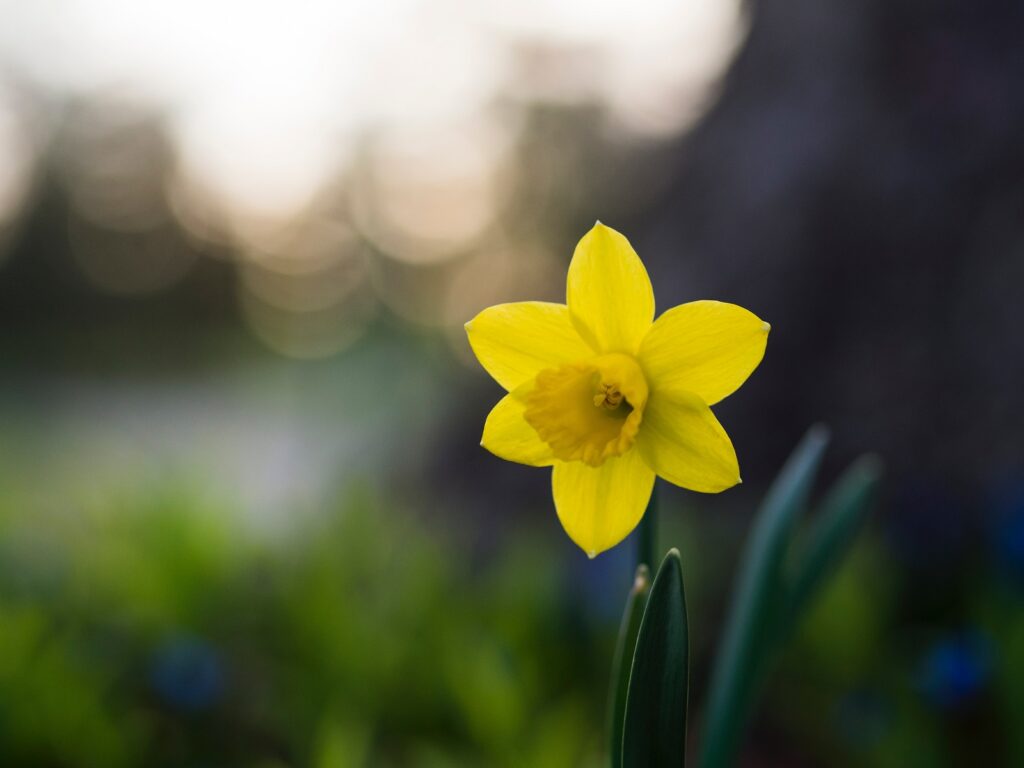
Flower in the crannied wall,
I pluck you out of the crannies,
I hold you here, root and all, in my hand,
Little flower–but if I could understand
What you are, root and all, and all in all,
I should know what God and man is.
(Alfred Tennyson)
The Poet’s Song
The rain had fallen, the Poet arose,
He pass’d by the town and out of the street;
A light wind blew from the gates of the sun,
And waves of shadow went over the wheat;
And he sat him down in a lonely place,
And chanted a melody loud and sweet,
That made the wild-swan pause in her cloud,
And the lark drop down at his feet.
The swallow stopt as he hunted the fly,
The snake slipt under a spray,
The wild hawk stood with the down on his beak,
And stared, with his foot on the prey;
And the nightingale thought, ‘I have sung many songs,
But never a one so gay,
For he sings of what the world will be
When the years have died away.’
(Alfred Tennyson)
The Tears Of Heaven
Heaven weeps above the earth all night till morn,
In darkness weeps as all ashamed to weep,
Because the earth hath made her state forlorn
With self-wrought evil of unnumbered years,
And doth the fruit of her dishonor reap.
And all the day heaven gathers back her tears
Into her own blue eyes so clear and deep,
And showering down the glory of lightsome day,
Smiles on the earth’s worn brow to win her if she may.
(Alfred Tennyson)
Will
O well for him whose will is strong!
He suffers, but he will not suffer long;
He suffers, but he cannot suffer wrong:
For him nor moves the loud world’s random mock,
Nor all Calamity’s hugest waves confound,
Who seems a promontory of rock,
That, compass’d round with turbulent sound,
In middle ocean meets the surging shock,
Tempest-buffeted, citadel-crown’d.
But ill for him who, bettering not with time,
Corrupts the strength of heaven-descended Will,
And ever weaker grows thro’ acted crime,
Or seeming-genial venial fault,
Recurring and suggesting still!
He seems as one whose footsteps halt,
Toiling in immeasurable sand,
And o’er a weary sultry land,
Far beneath a blazing vault,
Sown in a wrinkle of the monstrous hill,
The city sparkles like a grain of salt.
(Alfred Tennyson)
The City Child
Dainty little maiden, whither would you wander?
Whither from this pretty home, the home where mother dwells?
“Far and far away,” said the dainty little maiden,
“All among the gardens, auriculas, anemones,
Roses and lilies and Canterbury-bells.”
Dainty little maiden,whither would you wander?
Whither from this pretty house, this city-house of ours?
“Far and far away,”said the dainty little maiden
“All among the meadows, the clover and the clematis,
Daisies and kingcups and honeysuckle flowers.”
(Alfred Tennyson)
The Owl
When cats run home and light is come,
And dew is cold upon the ground,
And the far-off stream is dumb,
And the whirring sail goes round,
And the whirring sail goes round;
Alone and warming his five wits,
The white owl in the belfry sits.
When merry milkmaids click the latch,
And rarely smells the new-mown hay,
And the cock hath sung beneath the thatch
Twice or thrice his roundelay,
Twice or thrice his roundelay;
Alone and warming his five wits,
The white owl in the belfry sits.
(Alfred Tennyson)
The Throstle
“Summer is coming, summer is coming,
I know it, I know it, I know it.
Light again, leaf again, love again.”
Yes, my wild little poet.
Sing the new year in under the blue,
Last year you sang it as gladly,
“New, new, new, new!” Is it then so new
That you should carol so madly?
“Love again, song again, nest again, young again,”
Never a prophet so crazy!
And hardly a daisy as yet, little friend,
See, there is hardly a daisy.
“Here again, here, here, here, happy year!”
O warble unchidden, unbidden!
Summer is coming, is coming, my dear.
And all the winters are hidden.
(Alfred Tennyson)
The Brook
I come from haunts of coot and hern,
I make a sudden sally,
And sparkle out among the fern,
To bicker down a valley.
By thirty hills I hurry down,
Or slip between the ridges,
By twenty thorpes, a little town,
And half a hundred bridges.
Till last by Philip’s farm I flow
To join the brimming river,
For men may come and men may go
But I go on forever.
I chatter over stony ways,
In little sharps and trebles,
I bubble into eddying bays,
I babble on the pebbles.
With many a curve my banks I fret,
By many a field and fallow,
And many a fairy foreland set
With willow-weed and mallow.
I chatter, chatter as I flow
To join the brimming river,
For men may come and men may go
But I go on forever.
I wind about, and in and out,
With here a blossom sailing,
And here and there a lusty trout,
And here and there a grayling.
And here and there a foamy flake
Upon me as I travel
With many a silver water-break
Above the golden gravel.
And draw them all along, and flow
To join the brimming river,
For men may come and men may go
But I go on forever.
I steal by lawns and grassy plots,
I slide by hazel covers;
I move the sweet forget-me-nots
That grow for happy lovers.
I slip, I slide, I gloom, I glance,
Among my skimming swallows;
I make the netted sunbeam dance
Against my sandy shallows.
I murmur under moon and stars
In brambly wildernesses;
I linger by my shingly bars;
I loiter round my cresses;
And out again I curve and flow
To join the brimming river,
For men may come and men may go
But I go on forever.
(Alfred Tennyson)
The Shell
from the Maud
See what a lovely shell,
Small and pure as a pearl,
Lying close to my foot,
Frail, but a work divine,
Made so fairily well
With delicate spire and whorl,
How exquisitely minute,
A miracle of design!
What is it? a learned man
Could give it a clumsy name.
Let him name it who can,
The beauty would be the same.
The tiny cell is forlorn,
Void of the little living will
That made it stir on the shore.
Did he stand at the diamond door
Of his house in a rainbow frill?
Did he push, when he was uncurl’d
A golden foot or fairy horn
Thro’ his dim water-world?
Slight, to be crush’d with a tap
Of my finger-nail on the sand;
Small, but a work divine,
Frail, but of force to withstand,
Year upon year, the shock
Of cataract seas that snap
The three-decker’s oaken spine
Athwart the ledges of rock,
Here on the Breton strand!
(Alfred Tennyson)
You may also like:
- quotes from Agatha Christie’s books
- collection of Christmas book quotes
- book quotes by Virginia Woolf
- quotes and poems by Sylvia Plath
- book quotes by Ray Bradbury
- quotes from books by Jane Austen
- poems by Robert Frost
- book quotes and poems about nature
- quotes from books by Tove Jansson
- quotes and poems about mothers
- love poetry by Pablo Neruda
- romantic sonnets by Shakespeare
- collection of poetry by Emily Dickinson
- nature-inspired poems by Mary Oliver
- book quotes about summer, spring, autumn, and winter
- smart book quotes by Lewis Carroll
- a collection of soulful poems about love